+86 19937895259
+86 19937895259
Oil refining equipment is used to remove gums, free fatty acids, pigments, odours, waxes, moisture and other unwanted substances from crude vegetable oil. The refining process improves the oil’s appearance, flavour, storage stability and suitability for cooking, frying, bottling or further food processing. Common refining stages include degumming, neutralization or deacidification, bleaching and deodorization, while some oils also require dewaxing or fractionation.
Our edible oil refining equipment can be configured for soybean oil, sunflower oil, peanut oil, rapeseed oil, palm oil, cottonseed oil, rice bran oil, corn germ oil, sesame oil and other vegetable oils.
Different systems are available for small oil mills, medium-sized edible oil factories and large continuous oil-processing plants. The refining process, equipment configuration and automation level can be customized according to crude oil quality, daily capacity and final product requirements.
A complete vegetable oil refinery plant normally contains several processing sections. Each section removes a different type of impurity from the crude oil.
Typical oil refinery equipment includes:
Crude oil storage tanks
Degumming tanks
Neutralization tanks
Oil washing equipment
Centrifugal separators
Vacuum drying systems
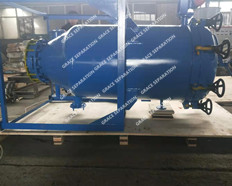
Bleaching tanks
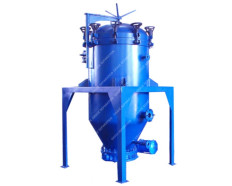
Leaf filters or plate filters
Deodorization towers
Vacuum systems
Heat exchangers
Steam generators
Dewaxing or winterization equipment
Oil transfer pumps
Refined oil storage tanks
Electrical control cabinets
PLC automation systems
The final configuration depends on whether the plant uses chemical refining, physical refining or a combination of both processes.
Degumming is used to remove phospholipids, gums, trace metals and other impurities from crude vegetable oil. Water, acid or another conditioning agent is mixed with the oil so that the gums can be hydrated and separated.
Removing gums before later refining stages helps reduce deposits, oil losses and undesirable colour changes during high-temperature processing.
A degumming system may include:
Oil heating tank
Acid or water dosing system
High-shear mixer
Hydration or reaction tank
Centrifugal separator
Vacuum dryer
Oil transfer pump
The appropriate degumming process depends on the phospholipid content and type of crude oil.
Neutralization is used in chemical refining to reduce free fatty acids. A controlled quantity of alkali is mixed with the crude oil, converting free fatty acids into soapstock that can be separated from the oil.
This stage can also remove some residual phospholipids, pigments and trace impurities.
Typical equipment includes:
Alkali preparation tank
Alkali dosing system
Oil-alkali mixer
Neutralization reactor
Centrifugal separator
Hot-water washing tank
Vacuum drying equipment
Accurate dosing is important because excessive alkali can increase neutral oil losses, while insufficient alkali may leave excessive free fatty acids in the oil.
After chemical neutralization, the oil may contain residual soap and moisture. Hot-water washing helps remove soap residues, while vacuum drying reduces the moisture content before bleaching.
The washing system may include mixing tanks, hot-water dosing devices, centrifugal separators and vacuum dryers.
Bleaching is an adsorption process used to reduce pigments, oxidation products, trace soap, residual phospholipids and certain contaminants that are not sufficiently removed during degumming and neutralization. Activated bleaching earth, silica or activated carbon may be used depending on the crude oil and quality target.
A bleaching section normally includes:
Vacuum bleaching tank
Bleaching earth dosing device
Powder conveying system
Agitator
Heating system
Leaf filter or pressure filter
Vacuum pump
Spent bleaching earth collection system
The amount of bleaching earth should be controlled according to oil colour, contaminant level and required finished-oil quality. Excessive adsorbent use can increase oil loss and operating costs.
Deodorization removes undesirable odours, flavours and volatile compounds through steam stripping under vacuum. In physical refining, free fatty acids can also be removed during high-vacuum steam distillation.
A deodorization system may include:
Deodorization tower
Oil heating system
Heat exchangers
Steam distribution system
High-vacuum system
Fatty acid collection system
Oil cooling system
Final polishing filter
Temperature, vacuum level, steam consumption and residence time must be properly controlled to achieve stable oil quality while limiting unnecessary thermal exposure.
Some vegetable oils contain waxes that can cause cloudiness or sediment at lower temperatures. Dewaxing or winterization gradually cools the oil so that wax crystals form and can be filtered out.
This process is commonly considered for oils such as:
Sunflower oil
Corn germ oil
Rice bran oil
Cottonseed oil
Certain specialty seed oils
Typical equipment includes crystallization tanks, cooling systems, insulation systems and filtration equipment.
Palm oil fractionation separates palm oil into liquid and solid fractions through controlled cooling, crystallization and filtration.
The main products may include:
Palm olein
Palm stearin
Different melting-point fractions
Fractionation equipment normally includes crystallizers, cooling systems, membrane filters or filter presses, oil tanks and automatic temperature controls.
Two main refining methods can be used depending on the crude oil quality and production requirements.
| Comparison | Chemical Refining | Physical Refining |
|---|---|---|
| Free fatty acid removal | Alkali neutralization | Steam distillation |
| Main stages | Degumming, neutralization, bleaching and deodorization | Enhanced degumming, bleaching and steam deodorization |
| Soapstock production | Yes | Significantly reduced |
| Oil loss | Influenced by alkali dosage and soap separation | Influenced by pretreatment and distillation efficiency |
| Crude oil requirements | Can accommodate various crude oils | Requires effective gum and trace-metal removal |
| Wastewater generation | Generally higher due to washing | Generally lower |
| Process control | Alkali dosing and separation are important | Vacuum, temperature and pretreatment are important |
| Typical selection basis | Feedstock quality, capacity and operating conditions | Feedstock suitability, energy use and product requirements |
Physical refining combines deacidification and deodorization through steam distillation under high vacuum, but it requires effective degumming and bleaching before the oil enters the deodorizer.
The refining method should be selected after analysing the crude oil’s free fatty acid content, phosphorus level, colour, moisture, oxidation condition and trace-metal content.
A batch oil refinery processes a fixed quantity of oil in separate tanks. Each refining stage is completed before the oil is transferred to the next section.
Batch systems are often selected for:
Small edible oil factories
Start-up oil businesses
Plants processing multiple oil varieties
Production with frequent product changeovers
Projects with limited initial investment
Advantages include a relatively simple structure, flexible operation and easier adjustment for different crude oils.
However, batch operation normally requires more operator involvement and may produce greater cycle-to-cycle variation than a well-controlled continuous system.
A semi-continuous plant combines batch and continuous processing stages. Degumming, neutralization and bleaching may operate in batches, while deodorization runs continuously or semi-continuously.
This configuration is suitable for medium-capacity projects that require better deodorization efficiency without investing in a fully continuous production line.
A continuous oil refinery plant transfers oil through each processing stage without dividing production into separate batches.
Continuous systems are generally selected for:
Large edible oil factories
High daily processing capacity
Standardized raw materials
Stable year-round production
Automated process control
Lower dependence on manual operation
A continuous line may provide more stable product quality, better heat recovery and more consistent throughput, but it requires more detailed engineering and a higher initial investment.
Our cooking oil refining machines can be configured for different pressed or solvent-extracted crude oils.
| Crude Oil | Common Refining Considerations |
| Soybean oil | Phospholipid removal, neutralization, bleaching and deodorization |
| Sunflower oil | Degumming, bleaching, deodorization and possible dewaxing |
| Peanut oil | Colour, flavour and free fatty acid control |
| Rapeseed or canola oil | Degumming, deacidification, bleaching and deodorization |
| Cottonseed oil | Pigment removal, neutralization and possible winterization |
| Rice bran oil | Free fatty acid control, wax removal and deodorization |
| Corn germ oil | Degumming, bleaching, deodorization and dewaxing |
| Palm oil | Degumming, bleaching, deodorization and optional fractionation |
| Palm kernel oil | Refining and optional fractionation |
| Sesame oil | Process selected according to whether natural aroma should be retained |
| Coconut oil | Deacidification, bleaching and deodorization |
| Camellia seed oil | Low-loss refining and controlled deodorization |
The same refining configuration should not automatically be used for every oil. The process must be adjusted according to the composition and quality of the crude oil.
Oil-contact tanks, pipelines and key components can be manufactured from stainless steel to support hygienic operation and easier cleaning.
Heat exchangers, steam coils and cooling systems help maintain the required temperatures during degumming, neutralization, bleaching, deodorization and crystallization.
Vacuum systems are used during drying, bleaching and deodorization to reduce moisture, support volatile-component removal and limit contact with oxygen at elevated temperatures.
Acid, alkali, water, bleaching earth and other processing aids can be added through controlled dosing systems. Accurate addition helps reduce chemical consumption and avoid unnecessary oil loss.
Continuous and large-capacity plants can use heat exchangers to transfer heat from outgoing refined oil to incoming oil, reducing steam and cooling requirements.
PLC and HMI systems can control:
Temperature
Vacuum
Tank levels
Material flow
Chemical dosing
Agitation time
Steam supply
Pump operation
Valve switching
Alarm conditions
Automation helps improve repeatability and allows operators to monitor the complete oil refining line from a centralized control panel.
The production line can be designed according to the customer’s existing oil press plant, solvent extraction plant, storage system and filling line.
E-mail: info@separationmachinery.com
Tel: +86 19937895259