## Understanding Solid Liquid Filtration Equipment for Pharmaceuticals
Solid Liquid Filtration Equipment plays a crucial role in the pharmaceutical industry, enabling the separation of solids from liquids to ensure purity and quality in product manufacturing. The process is essential in producing medicines and other healthcare products, where contamination must be minimized to maintain compliance with stringent regulatory standards.
At the core of solid-liquid filtration is the filtration mechanism. This typically involves key components such as filter media, a filtration vessel, a pump, and control systems. The filter media, which can be made of various materials depending on the application, is designed to capture solids while allowing liquid to pass through. Common types include membrane filters, depth filters, and screen filters, each suited for different solid-liquid separation tasks.
The working mechanism begins with the liquid containing suspended solids being introduced into the filtration vessel. The pump generates the necessary pressure to drive the liquid through the filter media. As the liquid flows, solids are trapped on the media surface, creating a cake layer, while the clarified liquid—referred to as the filtrate—exits the system. Continuous monitoring and automation technologies are integrated to optimize the filtration process, facilitating real-time adjustments to parameters such as pressure and flow rate.
Advanced technology significantly enhances the efficiency of solid-liquid filtration systems. Automated control systems utilize sensors and data analytics to monitor the performance of the filtration process, ensuring consistent product quality and reducing human error. Moreover, backwashing capabilities allow for the cleaning of filter media without disassembling the equipment, which improves uptime and productivity. These automated systems are crucial for high-throughput pharmaceutical manufacturing, where maintaining continuous operation is vital.
For instance, in the production of injectable solutions, the filtration equipment must remove not only visible particulates but also microorganisms. Robust solid-liquid filtration systems using depth filters can ensure that the final product is sterile and free from any contaminants, which is paramount in maintaining patient safety.
In conclusion, solid-liquid filtration equipment is a cornerstone of modern pharmaceutical manufacturing. Its efficient design and advanced technological integration facilitate the smooth operation of production processes. By harnessing the power of these systems, pharmaceutical manufacturers can ensure the quality and reliability of their products. For those seeking to upgrade their filtration capabilities or explore new technologies, it is advisable to contact us for further discussion regarding our suppliers and solutions available for your specific needs.



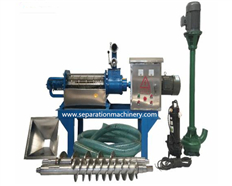
 Flotation Separating Equipment