## Understanding Tubular Centrifuges for Wastewater Treatment
In the realm of wastewater treatment, tubular centrifuges stand out as advanced technology that significantly enhances the efficiency and effectiveness of purification processes. These devices are essential in separating solids from liquids by utilizing the principles of centrifugal force, thereby making them a vital component in modern manufacturing and environmental management.
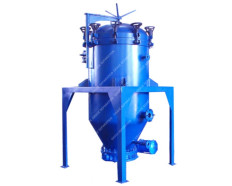
A tubular centrifuge consists primarily of a cylindrical bowl that rotates at high speeds, creating a strong centrifugal force. As wastewater enters the centrifuge, its density is strategically utilized to separate heavier solid particles from lighter liquid components. The key components of a tubular centrifuge include the feed pipe, the rotating bowl, the outlet ports for solids and liquids, and the drive mechanism.
The operating mechanism begins when wastewater is fed into the centrifuge through a feed pipe. As the bowl spins, the centrifugal force acts upon the mixture, pushing the denser solids outward toward the bowl's wall. The separation process occurs as the lighter liquid phase moves inward, eventually being collected via an outlet, while the solid waste accumulates against the bowl wall. The design of the bowl facilitates continuous discharge, allowing for an uninterrupted treatment process.
Advanced technology plays a crucial role in the efficiency of tubular centrifuges. Many systems are integrated with automation and control software that monitors parameters such as speed, temperature, and pressure. This real-time data allows for adjustments to optimize separation efficiency and reduce energy consumption. Additionally, innovations in material science have led to the development of corrosion-resistant and lightweight materials, enhancing the longevity and reliability of the equipment.
A practical application of tubular centrifuges can be seen in the food processing industry, where wastewater generated from production lines often contains high levels of organic solids. By employing a tubular centrifuge, manufacturers can effectively treat this wastewater, recovering valuable resources while reducing environmental impact. Moreover, the energy savings and process efficiencies achieved through these technological advancements make tubular centrifuges a worthy investment for businesses looking to enhance sustainable practices.
In conclusion, tubular centrifuges represent a pivotal advancement in wastewater treatment technology, significantly contributing to improved manufacturing processes and environmental stewardship. Their efficient design, combined with advanced technology, ensures that industries can manage byproducts responsibly while maximizing resource recovery. For more information on tubular centrifuge options and quality suppliers, please contact us to explore how these invaluable systems can benefit your operations.


 Separating Equipment Factory