Laboratory solid-liquid filtration equipment is an essential component in various scientific and industrial applications, facilitating the separation of solids from liquids to obtain purified liquid or solid products. This equipment plays a critical role in laboratories across fields such as chemistry, biology, environmental science, and pharmaceuticals, where precise filtration and separation processes are paramount.
At the core of laboratory solid-liquid filtration are devices such as filter papers, vacuum filters, and centrifuges, each designed for specific types of filtration tasks. Filter papers, widely used due to their simplicity and cost-effectiveness, allow for gravity-assisted separation, where liquid passes through a porous medium while solids are retained. Vacuum filtration, on the other hand, enhances the process by employing a vacuum pump to create a pressure differential, accelerating the filtration speed and improving the efficiency of solid retention. Centrifuges provide another method, using rapid rotational forces to separate components based on density differences, making them ideal for samples with very fine particulates.
Selecting the appropriate filtration equipment requires an understanding of the physical and chemical properties of the materials involved. Factors such as particle size, viscosity of the liquid, and the desired clarity of the filtrate are critical in determining the most effective filtration technique. Advanced equipment often includes features such as automation, real-time monitoring, and easy cleaning mechanisms, which can significantly enhance laboratory efficiency and accuracy.
The expertise in utilizing laboratory filtration equipment allows scientists to not only obtain clearer liquids but also to isolate and collect solid samples for further analysis. This capability is essential for applications ranging from the purification of chemical compounds to the analysis of environmental samples for contaminants. Furthermore, understanding how different filtration methods impact the properties of the resultant materials is crucial for maintaining the integrity of experimental outcomes.
Experience in handling various types of filtration systems also contributes to the overall effectiveness of laboratory operations. Proper training and knowledge-sharing among lab personnel about the operation, maintenance, and troubleshooting of filtration equipment can lead to improved process reliability and safety, fostering a more innovative and productive laboratory environment.
In summary, laboratory solid-liquid filtration equipment is fundamental for a myriad of applications that require precise separation techniques. Its effectiveness is governed by the appropriate selection and operation of the equipment, bolstered by the expertise and experience of the personnel utilizing it. Such practices not only ensure high-quality results but also uphold the standards of scientific research and industrial processes.


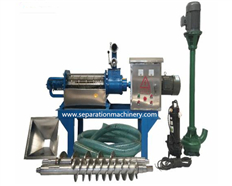
 Pharmaceutical Separating Equipment