Separating equipment for chemical solutions plays a crucial role in various industrial and laboratory processes, where the purity and quality of chemical substances are paramount. This category of equipment encompasses a range of devices designed to isolate, purify, or concentrate specific components from mixtures. With advancements in technology and an increasing demand for efficient separation techniques, understanding the various types of equipment and their applications is essential for professionals in the field.
One of the primary methods of separation involves the use of distillation units, which exploit differences in boiling points to separate volatile compounds. These units are essential in industries such as petrochemicals and pharmaceuticals, where high-purity products are required. In addition to distillation, other techniques such as filtration, centrifugation, and membrane processes—like reverse osmosis and ultrafiltration—are utilized to achieve separation based on particle size, density, or solubility properties.
Centrifuges, for instance, are widely used in laboratories and manufacturing settings to separate mixtures based on density variations. By applying high rotational speeds, heavier particles move outward and can be collected, while lighter fractions remain closer to the center. This principle is particularly valuable in biochemistry and biotechnology applications, where the separation of cells, proteins, and other biomolecules is often necessary.
Moreover, membrane technologies have revolutionized the separation processes for liquids and gases. These systems involve semipermeable membranes that selectively allow certain components to pass through while rejecting others. This method is not only efficient but also reduces the need for extensive chemical processing, positioning membrane systems as eco-friendly alternatives in various applications, including water treatment and food processing.
The effectiveness of separation technologies is further enhanced by advances in automation and real-time monitoring. The integration of sensors and data analytics allows for more precise control over the separation processes, ensuring optimal operating conditions and improved safety measures.
In conclusion, separating equipment for chemical solutions is integral to maintaining the quality of products across numerous industries. With a robust understanding of the principles, techniques, and technologies involved, professionals can ensure that separation processes are carried out efficiently. As industries continue to innovate and demand higher standards, expertise in the design and application of these separation systems remains vital for achieving excellence in chemical processing and production.

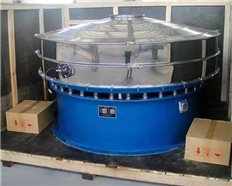
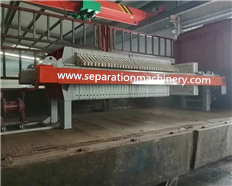
 Liquid Liquid Separation Equipment